

Imagine walking into a massive library where every book, shelf, and catalogue is arranged in perfect harmony. You don’t need to search aimlessly—each section tells a story, every reference leads to another, and the entire structure feels natural. That’s what dimensional modelling aims to achieve for data. It organises information in a way that makes complex business questions easy to answer—just like finding the right book in a well-organised library.
Dimensional modelling, pioneered by Ralph Kimball and Bill Inmon, is at the heart of modern business intelligence. It allows data analysts and decision-makers to design systems that turn raw information into actionable insights through efficient querying and reporting.
The Philosophy Behind Dimensional Modelling
At its core, dimensional modelling isn’t just about building databases—it’s about storytelling with data. Every business event becomes a “fact,” while every descriptor of that event forms a “dimension.” Together, they create a framework that simplifies how information is stored, queried, and understood.
Kimball’s approach, often referred to as the bottom-up method, focuses on delivering business-ready data marts quickly. In contrast, Inmon’s top-down approach promotes an enterprise-wide data warehouse before creating departmental subsets.
Professionals exploring a business analysis course in Pune often start here—understanding how both philosophies work together to help organisations make sense of vast, varied datasets.
The Star Schema: Simplicity with Power
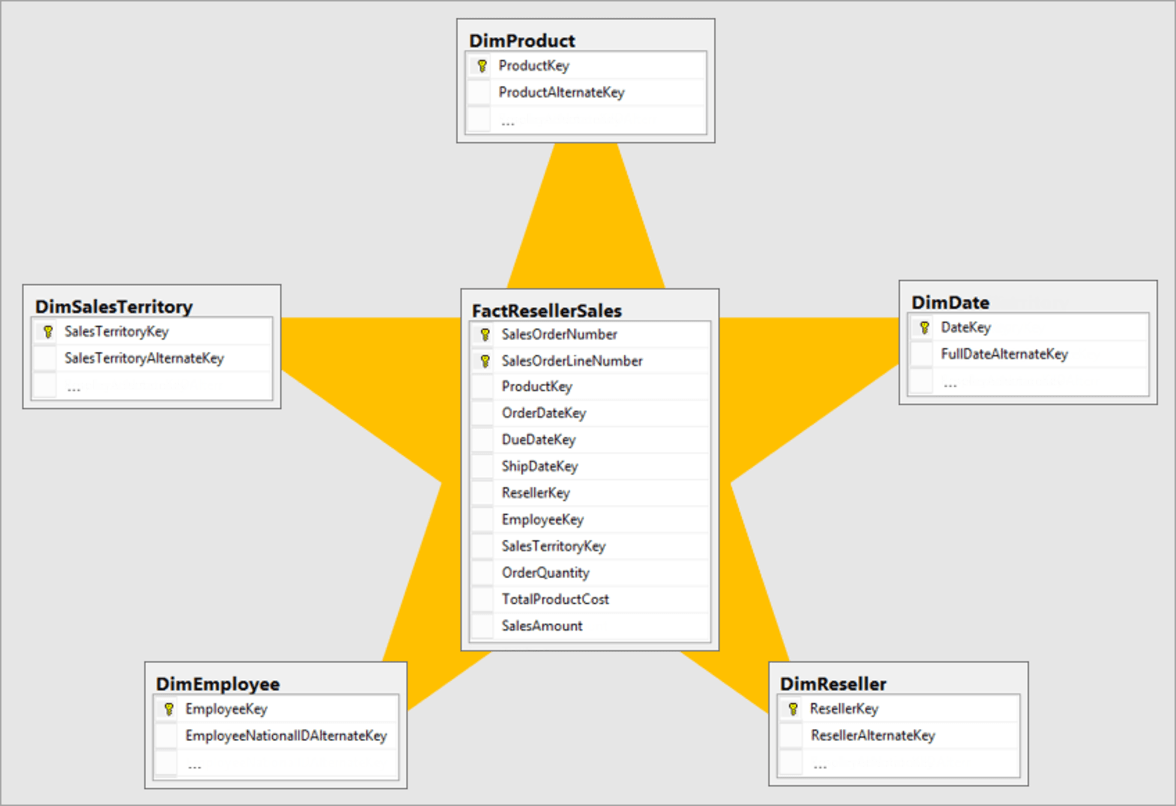
The star schema is one of the most recognisable structures in dimensional modelling. Imagine a star—its centre represents a fact table containing quantitative data, while each point of the star represents a dimension table describing attributes like time, location, or product.
This structure allows for fast, straightforward querying because each dimension connects directly to the fact table. For example, a retail company might track sales (fact) linked to products, stores, customers, and dates (dimensions).
The brilliance of the star schema lies in its balance—simple enough for analysts to use, yet powerful enough to handle complex queries. Business users can quickly slice and dice data, compare trends, and generate insights without writing overly complicated SQL queries.
The Snowflake Schema: Normalisation for Efficiency
While the star schema focuses on simplicity, the snowflake schema prioritises precision. It breaks down dimension tables into smaller sub-tables, removing redundancy and improving data integrity.
In this structure, each “point” of the star expands into multiple layers, forming a snowflake-like pattern. For instance, a customer dimension might split into separate tables for location, demographics, and preferences.
This design is ideal for environments where data accuracy and storage efficiency are paramount. It’s particularly useful for large organisations dealing with complex hierarchies and relational dependencies.
Professionals who enrol in a business analysis course in Pune often learn to evaluate when to choose a snowflake schema over a star schema, depending on the business requirements and reporting needs.
Balancing Kimball and Inmon in Modern Analytics
In today’s data-driven world, the debate between Kimball and Inmon has evolved into a collaborative practice. Modern architectures blend the agility of Kimball’s data marts with the scalability of Inmon’s enterprise data warehouse.
This hybrid approach ensures that organisations can move fast without compromising long-term data governance. The result is a unified view that supports self-service analytics, compliance, and cross-departmental insights.
For analysts and engineers, the real challenge lies in understanding how to balance simplicity, accuracy, and performance—all of which are core principles of dimensional modelling.
Building for the Future of Analytics
Dimensional modelling continues to serve as the foundation for advanced analytics and business intelligence tools. Whether integrated with cloud data warehouses like Snowflake, Redshift, or BigQuery, the underlying logic remains the same—organise for clarity, optimise for speed, and design for scalability.
As data volumes grow and queries become more complex, the need for structured yet flexible architectures will only intensify. Analysts who can model data effectively will remain indispensable in helping organisations make informed, data-backed decisions.
Conclusion
Dimensional modelling is both an art and a science. It turns data chaos into structured clarity, ensuring that information is not only stored but also understood. By mastering Kimball’s and Inmon’s design principles, professionals can build analytical systems that stand the test of time.
For learners aiming to strengthen their analytical and data structuring skills, exploring a business analysis course in Pune offers the foundation needed to design efficient, business-ready schemas that drive smarter decisions.