

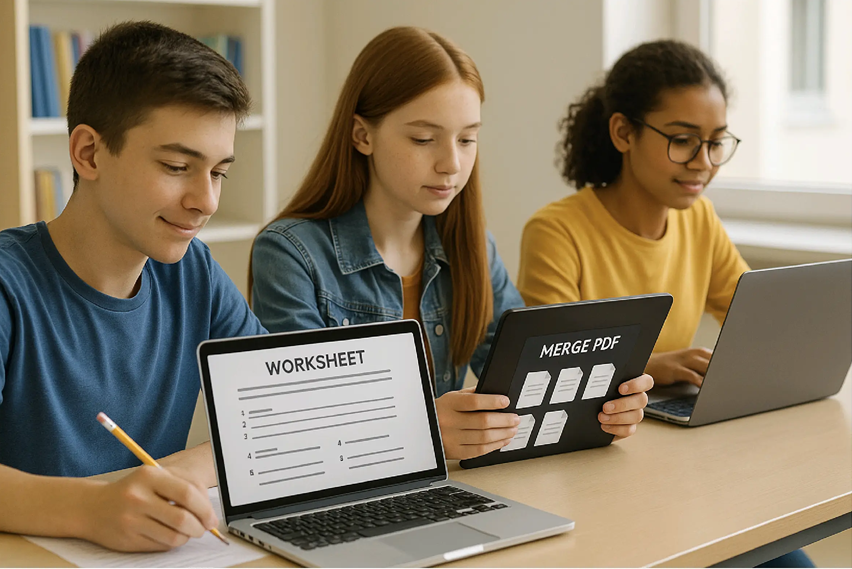
Homework has undergone a dramatic transformation. For decades, students completed assignments using paper worksheets, textbooks, and handwritten notes. But with the rise of digital learning platforms, internet-accessible classrooms, and one-to-one laptop programs, the workflow for completing and submitting homework has changed more in the past few years than in the previous fifty.
Today, PDF files have become the universal language of digital homework. Students download assignments, complete them either digitally or by hand, and then upload them to platforms like Google Classroom, Canvas, Moodle, and Blackboard. This shift created a new challenge: organizing and combining multiple pages or file types into one clean submission. That’s why tools that allow students to Merge PDF files have become essential to the modern educational process.
1. The Era of Paper Worksheets
Before digital learning tools existed, homework relied on:
- Printed worksheets
- Handwritten essay papers
- Textbook exercises
- Notebook entries
- Physical project posters and binders
Assignments were easy to organize physically—students simply clipped pages together or placed them into a folder. Teachers graded each set in person and returned feedback on paper. The process was simple, but it had limitations: lost assignments, illegible handwriting, and limited portability.
2. The Shift to Digital Homework
As schools adopted digital tools, homework formats evolved rapidly. Teachers began:
- Posting instructions online
- Assigning digital worksheets
- Using Google Docs or cloud-based forms
- Requiring typed essays
- Collecting digital scanned pages of handwritten work
The transition empowered students to learn anywhere, anytime. However, it also introduced file fragmentation—students often ended up with 4–10 separate files for a single assignment.
3. The Rise of PDF as the Homework Standard
PDFs became the preferred format for homework because they offer:
- Consistent formatting across all devices
- Universal compatibility with laptops, tablets, and phones
- Easy annotation for teachers using digital grading tools
- Protection from unwanted changes
- Simple printing when hard copies are needed
For these reasons, most modern homework is distributed and submitted as PDFs.
4. Why Students Must Merge PDF Files Today
Digital assignments are rarely a single file. Students often must combine:
- Downloaded worksheets
- Typed answers
- Scanned notebook pages
- Photos of handwritten math steps
- Resource pages or readings
Learning platforms typically allow only one file per submission. Without a merging tool, students risk losing pages, uploading documents out of order, or submitting incomplete work.
Tools like Merge PDF solve this problem by allowing students to combine all pages into one organized file within seconds—no software installation required.
5. How Teachers Benefit from Merged Digital Homework
Teachers prefer merged PDFs because:
- Grading becomes faster and more efficient
- Pages remain in the correct order
- Important work is not separated across many files
- Annotations and comments are easier to apply
- The risk of missing files drops dramatically
Merged homework allows teachers to review assignments the same way they did with paper—sequentially and with a natural flow.
6. Merged PDFs Improve Study Skills
Students who merge PDFs aren’t just organizing homework—they’re building important academic habits:
- Clear digital filing
- Consistent review packs
- Better note organization
- Higher attention to detail
- Less stress during exams
It teaches students how to manage digital documents, an essential skill for both college and future careers.
7. Digital Homework and Accessibility
Merged PDFs support students with learning differences by offering:
- Compatibility with screen readers
- A single file instead of distracting multiple attachments
- Text search functionality
- Zoom and reflow options for low-vision learners
The more organized the material, the easier it is for all students to access.
8. Final Thoughts: The New Standard of Digital Homework
Homework has moved from paper worksheets to digital documents—and now, to consolidated learning files. The ability to merge PDFs is no longer just a convenience; it is a necessary skill for academic success. As schools continue adopting digital workflows, tools like Merge PDF become indispensable for students who want clean, complete, and professional homework submissions.
Modern homework starts with a file download and often ends with a merged PDF upload. And platforms like PDFmigo.com help students make that process fast, organized, and stress-free.